 nicolanoe.it Un sito dedicato agli spazi verdi e all'ambiente – A site dedicated to green spaces and the Environment


Alberoids are artificial trees with photovoltaic leaves, designed to generate energy without taking land away from agriculture: an idea for advanced agrivoltaics.
An idea for the countryside of the future
Imagine a countryside where, alongside the tree rows and meadows, a new kind of tree grows. It has no fruit and no sap, but its leaves gather sunlight and turn it into electricity. We call them alberoids (from the Italian alberoidi).
They are not a ready-to-use product: research and experimentation on materials and techniques are still needed. They are a long-term goal, an alternative that could help us out of the energy short circuit we have found ourselves in. We could describe it as an advanced agrivoltaics project.
Learning from plants, the queens of the planet
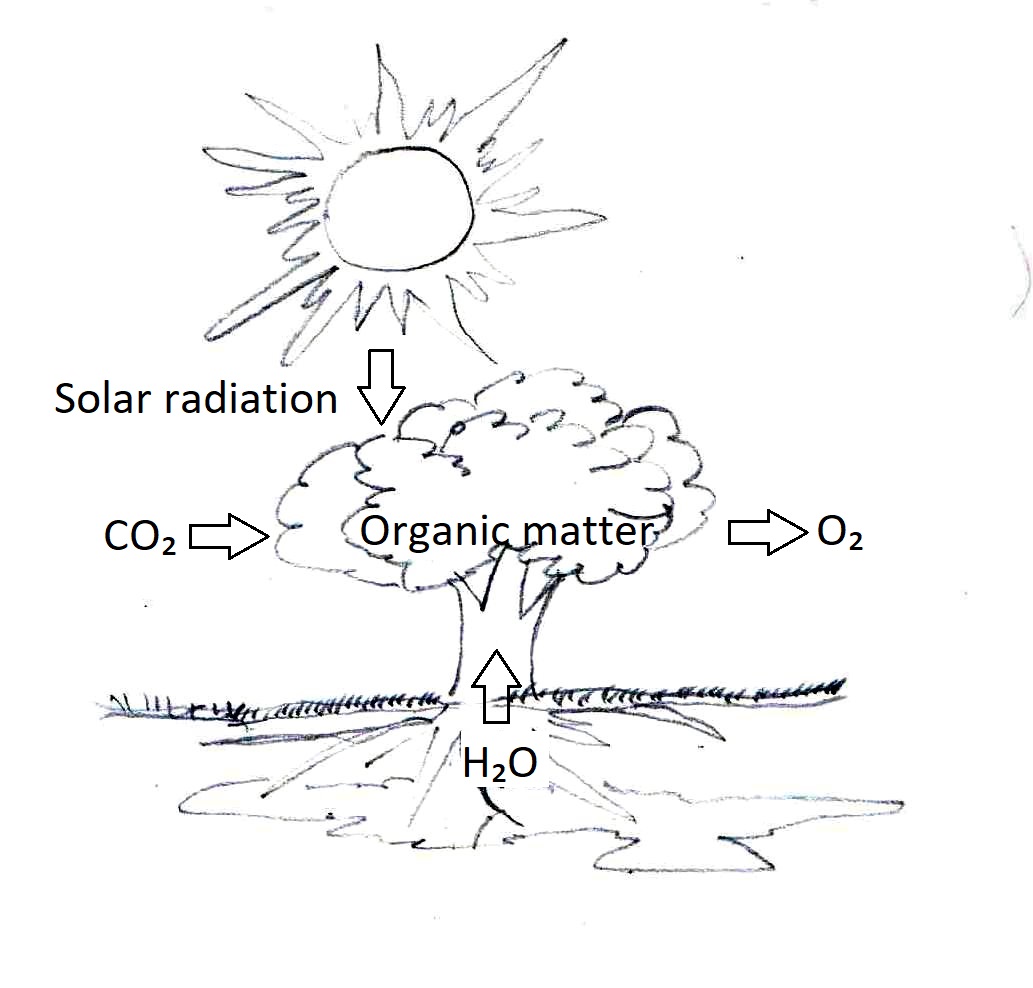
Nature solved the problem of capturing sunlight millions of years ago. In leaves, chlorophyll absorbs solar energy and, through photosynthesis, turns it into carbohydrates: the food on which the tree lives and grows.
The alberoid is inspired by this scheme: where a tree produces carbohydrates, an alberoid would produce electricity. Its green photovoltaic laminae would be fitted with receptors that we call, by analogy, “synthetic chloroplasts.”
The inspiration concerns form and integration into the landscape.
What already exists
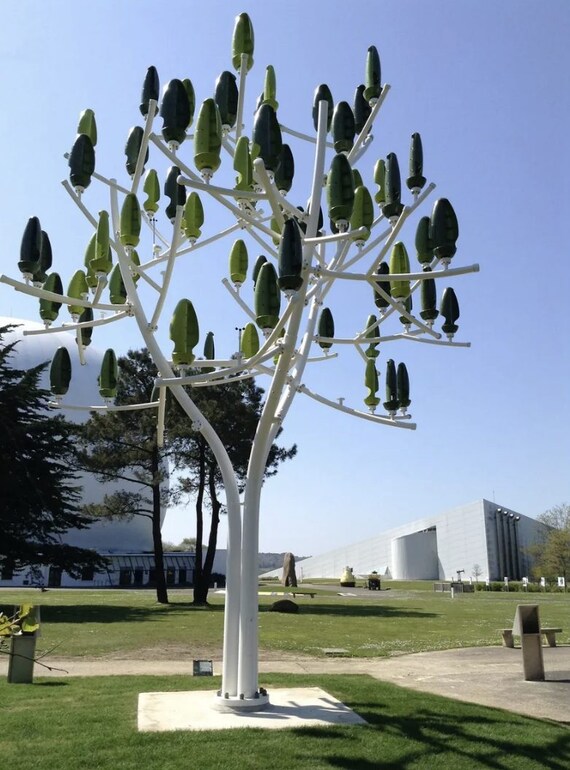
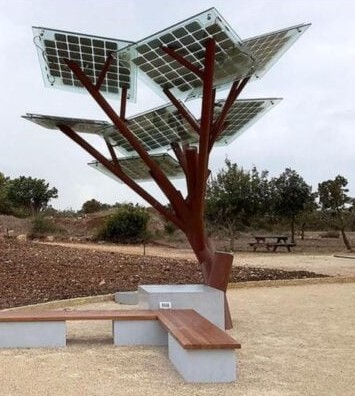
Artificial trees with photovoltaic blades or leaves, known internationally as Solar Trees, are one of the most interesting expressions of sustainable design and urban furniture. They use metal poles and arms as trunk and branches to orient small panels toward the light.
Some models are already on the market, others are still being studied. The technology is improving rapidly, and the source is practically inexhaustible: the Sun will keep shining for at least another 5 billion years.
-
- Solar-powered trees: [ohga.it]
-
- The E-Tree solar tree (2014): [futuranet.it]
-
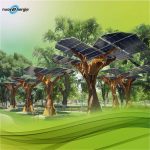
- Photovoltaic trees: what they are and what they are for: [nuovenergiespa.it]
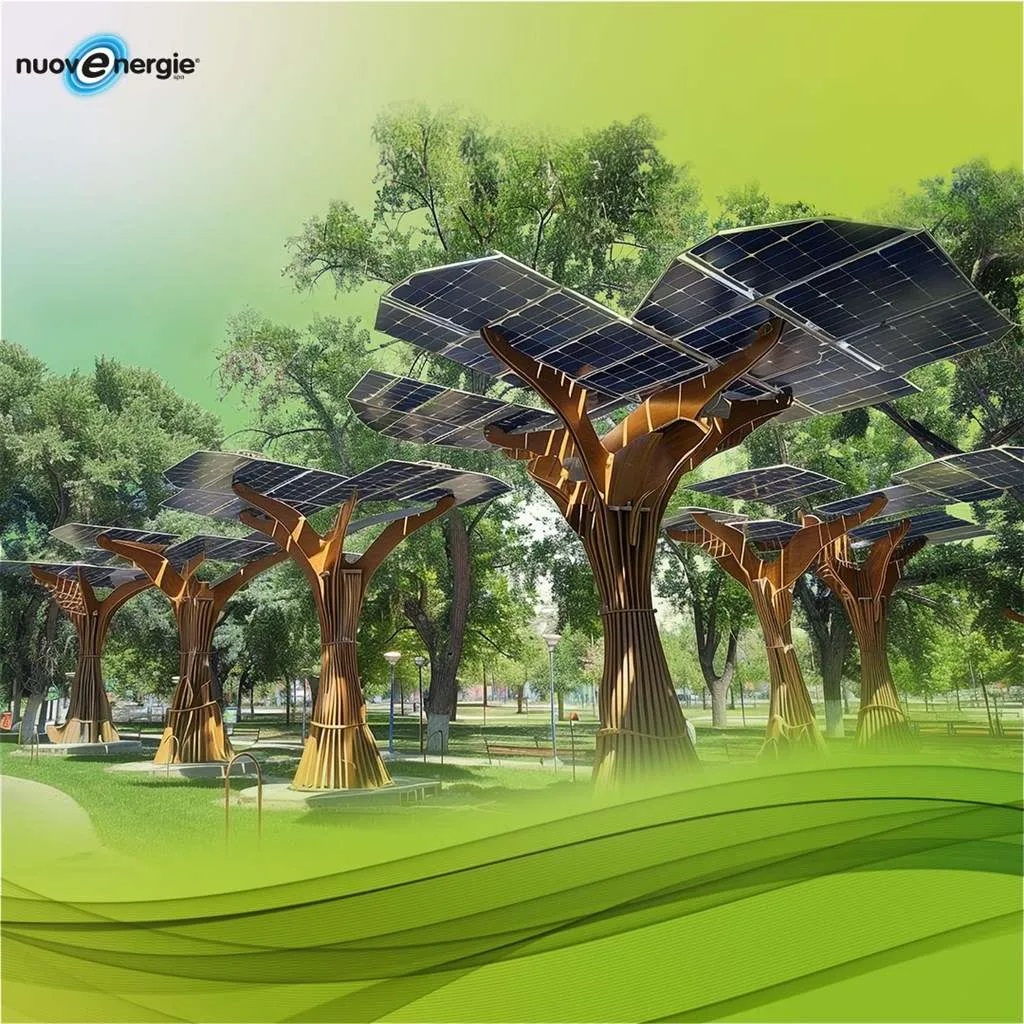
-
- SolarBotanic Trees: [infobuildenergia.it]
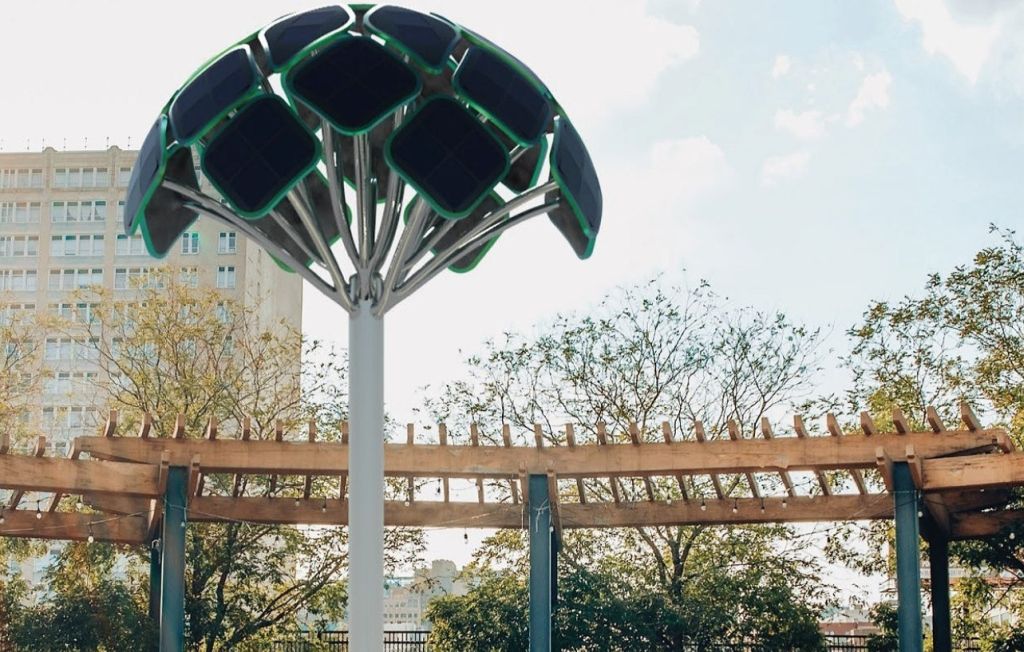
What an alberoid looks like
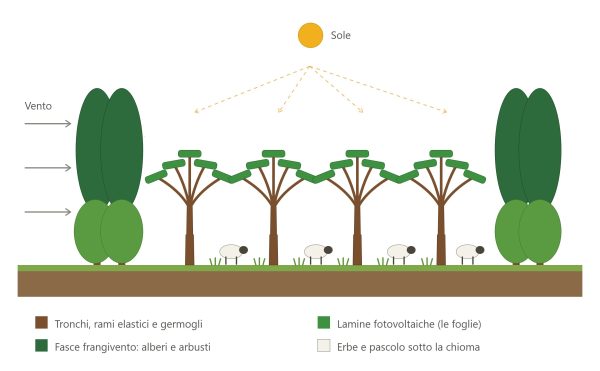
Each alberoid would have a trunk, elastic branches that bend like natural ones, and a tall synthetic crown made of photovoltaic laminae.
- Trunk and branches: a brown supporting structure, with elastic branches and buds that complete the look of a real tree.
- Synthetic crown: green photovoltaic laminae mounted on the branches like leaves, moving with the elastic structure.
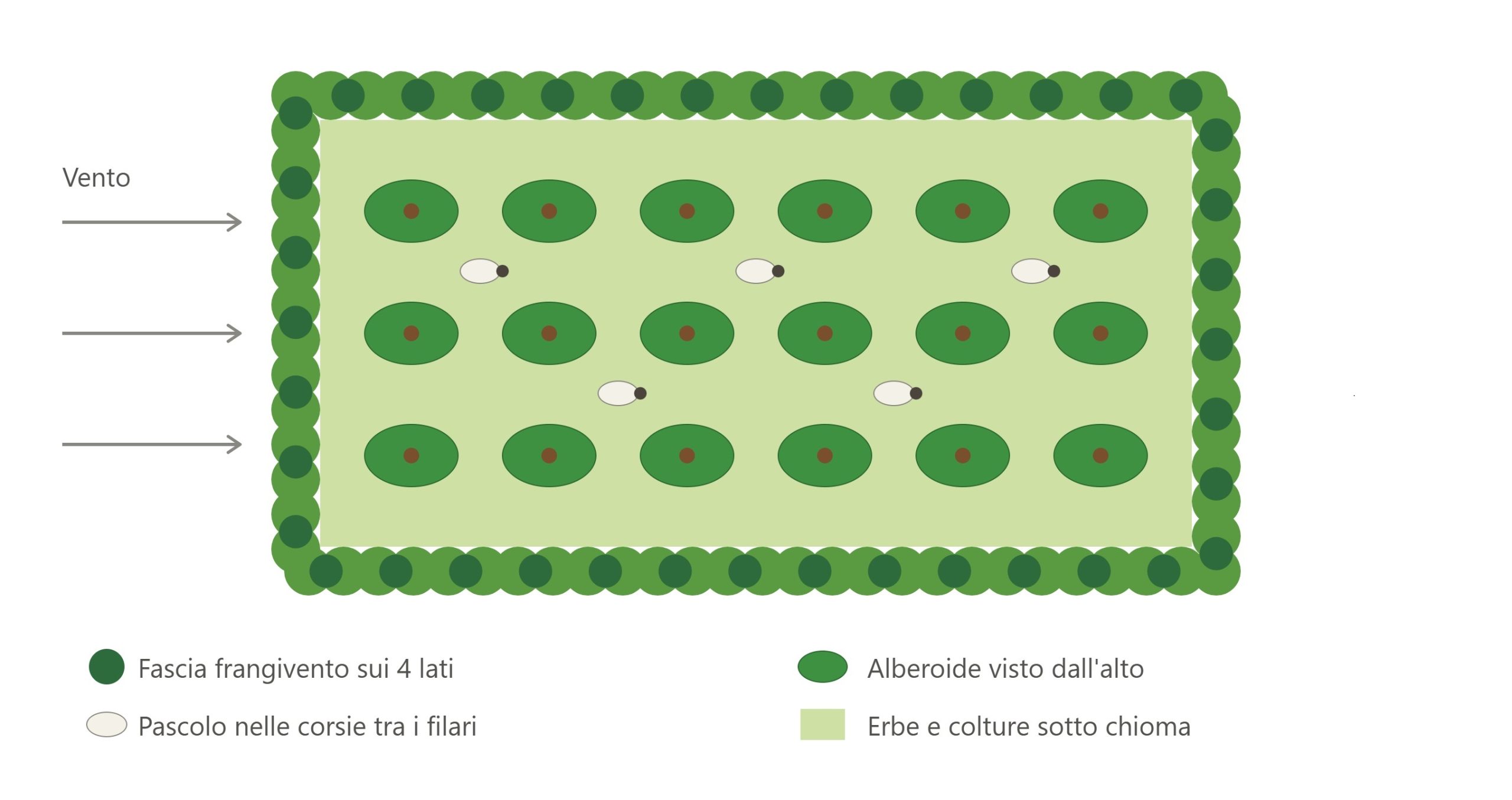
- High crown: the laminae are raised high enough to leave the ground free, so it can still be cultivated or grazed.
- Windbreaks: on all four sides of the plot, tall hedgerows of shrubs and trees protect the alberoids from the wind, reduce stress on the elastic structures and increase biodiversity.
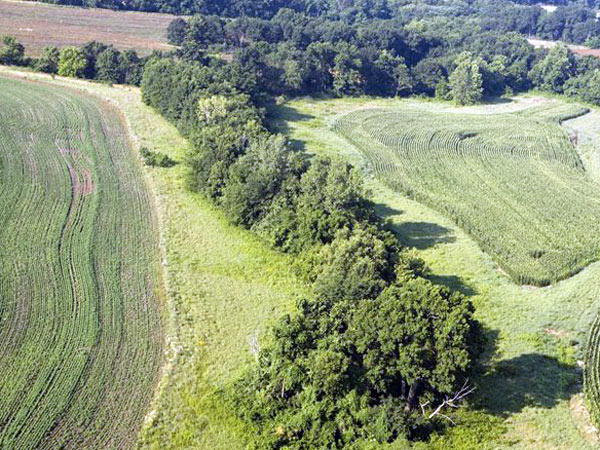
fasce-tampone-boscate-terreni-agricoli-gonzaga
The colours are chosen to fit the installation into the rural setting: brown for trunks and buds, green for the laminae. Beneath the crowns, crops can be grown or meadows left for grazing flocks, which keep the grass in order without mechanical mowing.
Why it is worth dreaming about
An alberoid would bring together energy, agriculture or pastoralism, and greenery on the same plot. It would give solar energy a familiar face, that of the tree, and bring into the agricultural landscape an idea of biomimicry: the form and function of the leaf turned into a technical and landscape design.
Free of the rigid geometry of traditional photovoltaic and agrivoltaic fields, and without taking land away from farming, renewable energy could become part of the rural landscape rather than being imposed on it.
The costs, yield per square metre and the durability of moving, flexible structures remain to be verified against conventional installations.
From dream to goal
Turning the dream into a concrete goal will take the work of engineers, agronomists and landscape architects. The questions to start from:
- How much of the leaf’s efficiency can be reproduced with artificial receptors and materials?
- How do the elastic branches respond to wind and fatigue?
- How should the laminae be oriented and tilted, and how much shade do they cast on crops and pasture?
- What spacing between alberoids, and what width for the windbreak strips?
- How can maintenance, grid connection and permitting be managed?
Cross-section of an alberoid plant with high crown and free ground
Plan of a plot with alberoids and windbreak strips.


