 nicolanoe.it Un sito dedicato agli spazi verdi e all'ambiente – A site dedicated to green spaces and the Environment


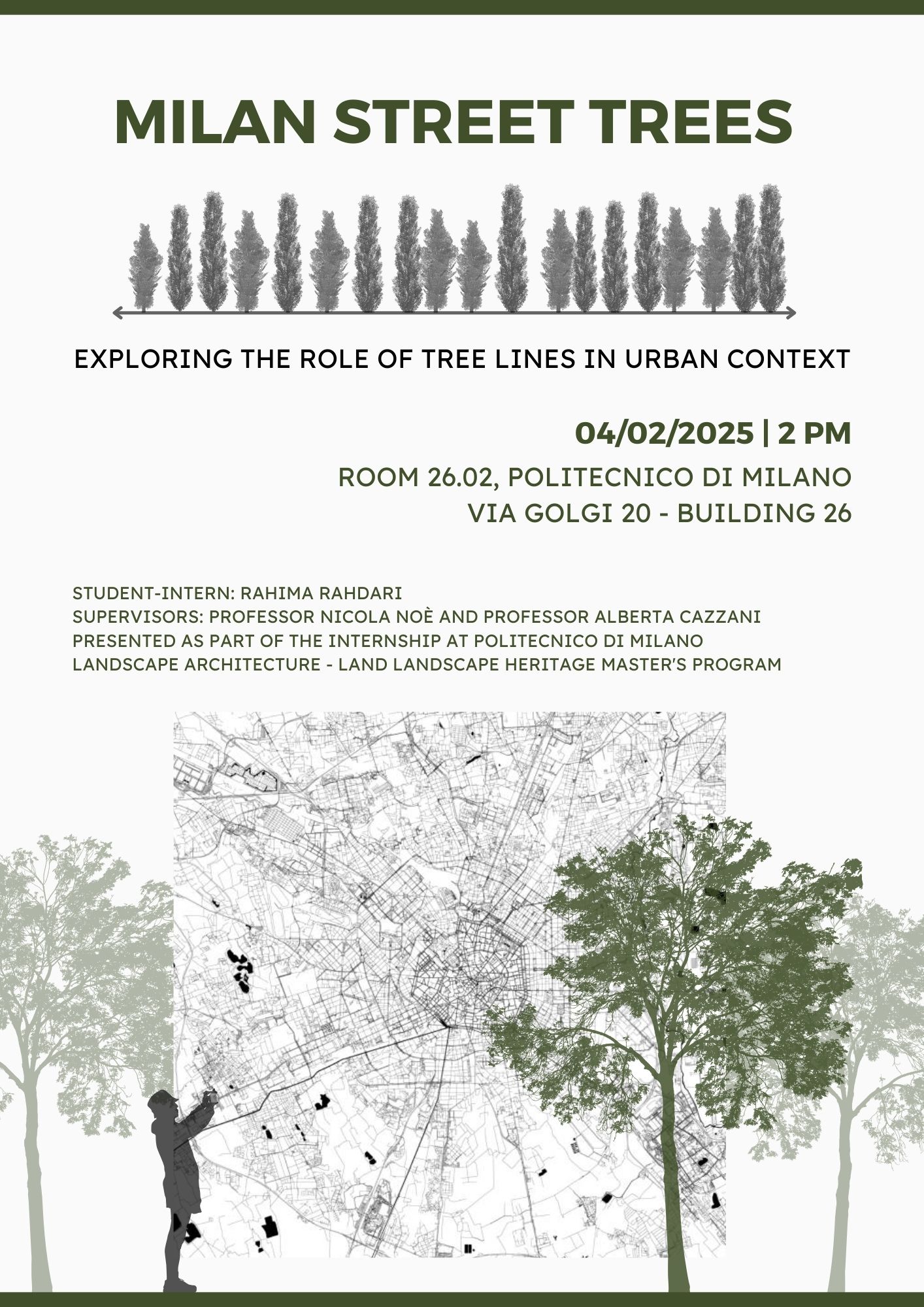
This presentation unveils the transformative potential and microclimatic benefits of tree lines in Milan’s urban environment, showcasing findings from a research project within the framework of a Politecnico di Milano teaching internship experience.
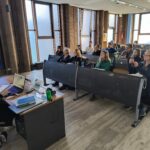
2025-02-04_Rahima Rahdari presentation
Conducted as part of the Landscape Architecture – Land Landscape Heritage Master’s program at Polimi, this research is supervised by Prof. Nicola Noè (Company supervisor) and Prof. Alberta Cazzani (Academic supervisor).
The research analyzes urban forestry, ecosystem services, and sustainable development in northeastern Milan, particularly around Parco Lambro and streets like Via Feltre.
This session marks the first report of the internship, presenting comprehensive findings on tree lines’ impact on urban ecosystems and planning strategies.
The presentation highlights actionable recommendations, including replanting strategies to address fragmented green corridors, upgrading urban infrastructure with permeable materials, and leveraging tree lines to mitigate urban heat islands and improve air quality.
Ecosystem services analysis: A detailed examination of rainwater interception, air cooling, CO2 fixation, and pollution removal. Using advanced methodologies such as Leaf Area Index (LAI) and tree-specific data from the 2024 census, the analysis quantifies the ecological and economic contributions of tree-lined streets.
GIS Mapping and historical trends: Insights derived from GIS-based mapping and historical data from 1986, 2007, and 2024 to understand changes in tree coverage, species distribution, and canopy density over time. These tools helped identify critical gaps and potential areas for reforestation.
Field surveys: Detailed field surveys assessed tree health, dimensions, and environmental stress factors. Advanced data collection tools like QGIS and species-specific reference datasets supported the evaluation of phytosanitary conditions and ecosystem services.
Case study: Via Feltre’s tree line was analyzed as a pivotal ecological corridor connecting Milan’s urban environment to Parco Lambro. Findings revealed gaps in tree continuity, infrastructure challenges, and areas for targeted ecological enhancements. Proposals include replanting Populus nigra Italica to restore connectivity, upgrading tree pits, and introducing undergrowth for biodiversity.
For more information please contact rahima.rahdari@mail.polimi.it, Politecnico di Milano, Via Golgi 20 , Building 26, room 26.02, February 4, 2 PM.